
If you haven’t already, do go back and read my blog, From the Beginning, before settling in here. It’s where the story of Apollo and me really starts.
This is the next chapter. Although, as I’m beginning to realise, sometimes moving forward means going back…..Picking up from the scruffy, scared pony I befriended, and ultimately fell in love with…

Those first few weeks were all about connection. Building trust in the field, making haltering feel safe, learning to lead, and figuring out how to handle all the little things that so many of us take for granted with horses.
Apollo is smart, and it didn’t take him long to figure out that he was safe with me and that we could have some fun together. He learned to pick up his feet for me without me needing to touch them. We explored movement, pressure and release, and spent hours on the ground preparing for the day he would accept me on his back. Just me and Apollo, on the flattest patch of grass we could find on the farm, figuring it all out together.
Looking back, there are certainly things I would do differently now. But I had already changed my approach enormously, and we were making some lovely progress. After a few weeks, I could lean over him and sit on his back without him batting an eyelid. That became a little movement, which became short rides out with a friend, all in a halter and bareback pad (and just to dispel a myth: not all native ponies are comfortable to ride bareback! My older Gypsy Cob mare was like sitting in an armchair. Apollo, with his withers and rather more shape, was a somewhat less luxurious experience!)
After a few rides, I turned Apollo away for three months while my family and I took the opportunity to travel around Europe. Having spent so much of my life never really feeling at home anywhere, and never particularly wanting to return from our travels, I found myself feeling something quite unexpected. I missed the farm. I missed my ponies. I missed home.
I was also in contact with the human herd most days, and I knew Apollo was finding my absence difficult. Whatever was going on for him, our relationship had become important to both of us.
When we returned, we went back to the basics and picked up where we had left off.
One thing Apollo found particularly difficult was being touched around his hindquarters. He also really disliked low branches brushing against my helmet. Given that our adventures involved riding through the forest, these were things we needed to work through carefully - there were a couple of incidents involving bolting along the way. He was a runner!
But we worked through those challenges, and we went on to have around 18 months of wonderful adventures together.
We were building a life, a partnership and a whole collection of memories. I thought we had found our rhythm.
When life changes everything
Then January 2026 arrived.
We were faced with having to leave the farm where we had made our home — the one place I had felt was home for the longest time.
And it wasn’t just me and my family. We had a herd of ponies who all needed to find new homes, too.
As if that wasn’t enough, in March I discovered I was pregnant.
At 45, with our youngest son already 11, this was not quite the life plan I had been working towards!
Suddenly, I felt plunged back into a period of chaos. I was trying to trust that things would unfold as they were meant to, while simultaneously clinging to the feeling that I had absolutely no control and no idea what the plan was.
Through a friend, I managed to find a new home for the herd on a farm not too far away. As it turned out, it was a wonderfully peaceful place. There was just one small drawback: we now had a good 15–20 minutes of lane riding before reaching the woodland trails. The ponies were sorted before the humans, in this instance!
Although we needed to vacate our old farm by the end of March, we were offered the opportunity to stay on a little longer, moving into the main house to look after it while it remained empty and the sale progressed.
It meant we got to enjoy the summer at the farm, which was a real gift. But it was bittersweet, knowing we would inevitably have to leave. We had already moved out of, and sold, our static caravan. We had been unable to find land of our own to buy, and finding a rental property in the Forest of Dean is no joke.
So, alongside the unplanned pregnancy, we were navigating the loss of our home, the move from the farm, the relocation of the ponies and the uncertainty of what came next.
And then, in early June, I made the decision to say goodbye to Roo.
Grief has a way of finding its place amongst everything else, whether or not you feel you have the space for it.
Looking back, I can see just how much we were all carrying.
The day everything stopped
The events of those months led to 11 June 2026.
Looking back now, I wonder how much Apollo had been trying to tell me that things weren’t quite right.
In late January, we had transitioned into a bit from a sidepull, before moving back out of it after Apollo managed to eat — or possibly be fed — something that caused hair loss and ulceration of his soft palate. I suspect there may have been wider internal imbalances involved, although I can’t know for certain, and I’m not convinced we have finished working through the consequences.
Then came the upheaval of moving, the changes to our routine, my pregnancy and the loss of Roo.
Pregnancy changes things in ways we don’t always fully appreciate. I smelled different, my body was changing, and there were now two heartbeats inside me. For a sensitive pony, that is quite a lot of new information to process.
I had so much going on that I kept pushing through. And perhaps that is the bit that matters most. I was so focused on getting through everything that I wasn’t paying enough attention to what was happening right in front of me.
One morning, Apollo started broncing in a way I had never experienced from him before. He behaved like a rank rodeo pony.
And I knew. I knew I shouldn’t get on him that morning (isn’t hindsight a wonderful thing?)
I had the thought. I paused. I had that little internal conversation with myself.
And then I ignored it and went to get on anyway.
My backside hadn’t even reached the saddle when he exploded.
My experience of those next few seconds was an extended, slow-motion “Oh, fuck,” as I grabbed the horn of my saddle, followed almost immediately by the dreaded thought:
He isn’t going to stop until I’m off.
In that moment, the options felt brutally simple: ride it out and hope he came through it, or bail.
The next thing I knew, I was on my side in the dirt, in excruciating pain.
I sat bolt upright, desperately trying to force some air back into my lungs. I was winded. My head was ringing, my vision was blurred, and I felt as though I had been hit by a truck.
After an internal debate about whether I could stand, walk or somehow get myself home, the pain and nausea won. I called my husband to come and collect me.
I honestly cannot remember the last time I felt so awful.
Failing to listen to what was happening in front of me landed me in A&E at 18 weeks pregnant, with severe concussion, ringing and deafness in my left ear, a fractured collarbone and a very firm telling-off.
It was terrifying.
And I was devastated.
Not just because I could no longer ride, or because all the plans I had for Apollo were suddenly on hold, or even because I was in so much physical pain.
I was devastated because I felt I had pushed my beloved pony to the point where he had no other way of making himself heard.
I cannot know exactly what Apollo was experiencing that morning, or whether any one of the changes we had been navigating contributed to what happened. But his behaviour was a very clear signal that something was wrong, and I had chosen to continue despite recognising that signal.
That hurt me more deeply than I can easily explain.
Going back to each other
For several days, I couldn’t even get to the yard.
Unsurprisingly, when you cannot dress or undress yourself without help, visiting your pony isn’t particularly straightforward!
I desperately wanted to see Apollo. I wanted to apologise, to reconnect and to begin repairing whatever damage I felt I might have done to our relationship.
When I finally made it back to the farm, one of the lovely ladies there offered to bring Apollo up from the field for me, but I wanted to meet him in the field, on his terms - I wanted him to have the opportunity to say no to me.
He didn’t. But it took a few visits before it felt as though we were really talking to one another again.
I don’t know whether he understood that I was hurting, or whether he felt any differently about me after the accident. I can only describe what those first moments felt like to me. Tentative. A little uncertain. Almost as though we were getting to know each other again, just as we had done more than two years earlier.
And perhaps that was exactly where we needed to be.
Not picking up where we had left off. Not expecting things to return to normal.
Just starting from where we were.
A plan, of course!
Once I had recovered enough to start living life again, I knew I needed a plan.
I am, after all, someone who likes to have a plan!
We had months of groundwork ahead of us, and I wanted to make the most of that time. My initial thought was to use this period to restart Apollo’s education, building a confident, capable pony who could cope with a job, whether that meant exploring the trails or, one day, working with cattle — a long-held aspiration of mine.
I wanted a pony who could think for himself, solve problems, navigate the world with confidence and become the sort of partner you could trust on an adventure.
And so, my groundwork plan began.
But it didn’t take long for me to realise that something else was happening.
I wanted more than a good horse.
I wanted to know Apollo.
Not just what he could do, or how well he responded to a cue, but who he was. His personality. His preferences. His curiosities. The things he enjoyed, the things he found difficult, and the things he would rather not do.
I wanted to become more observant. More curious. Better at noticing the little things before they became big things.
I wanted Apollo to trust me to listen.
And I wanted to learn how to communicate with him in a way that made sense to him, rather than simply expecting him to understand the world according to me.
The more I thought about it, the more I realised that this wasn't just about horses.
From nature connection to equine stewardship
As founders of Wilde Earth Journeys CIC, we spend our time helping people reconnect with nature, themselves and the world around them. Through accessible, nature-based wellbeing experiences, we create opportunities for people to slow down, notice more, build relationships and discover the benefits of being connected to the natural world.
So much of that work is rooted in something deceptively simple: creating the conditions for a relationship to flourish, rather than trying to force an outcome.
We encourage people to be curious. To notice what is around them. To recognise that connection doesn't have to be earned through achievement, and that sometimes the most meaningful thing we can do is simply pay attention.
And yet, when I looked at my relationship with Apollo, I began to wonder whether I had fully carried those same principles into my horsemanship.
I had worked hard to build his trust. I had changed my approach, learned to be more patient and made real progress in understanding him, but somewhere along the way, I had also become attached to the plans, the progress and the adventures we were having.
I had an idea of the pony I wanted him to become. And perhaps, without meaning to, I had sometimes been more focused on where we were going than on what he was telling me about where we were.
That realisation has been uncomfortable, but important.
Stewardship, to me, is about recognising that the responsibility we have for another being is not the same as ownership of their experience. It means paying attention to their needs, respecting their individuality and making decisions with their welfare in mind, even when those decisions challenge our own ambitions.
It means asking not simply, How do I get this horse to do what I want? but, What does this horse need from me to feel safe, understood and able to participate?
And sometimes it means being willing to change the plan. Even when we really, really like the plan.
From the Ground Up
And so, From the Ground Up began.
What started as a practical plan for months of groundwork has become something much more personal: a year-long journey with Apollo, exploring what it means to build a partnership through curiosity, observation, understanding and choice.
The aim isn't simply to produce a better-trained pony. It's to develop a relationship in which confidence, capability and trust grow alongside one another.
I still dream of forest adventures, working equitation, ranch skills and perhaps one day working cattle. Those ambitions haven't disappeared. But they are no longer the whole point.
I want Apollo to have the opportunity to become a confident, thoughtful horse who can make choices, explore his environment, learn at his own pace and enjoy the process. I want to understand his individual character, recognise his preferences and become better at reading the conversations he is already having with me.
And I want to keep asking myself a difficult but necessary question:
Am I doing this with Apollo, or am I simply doing it to him?
The first few weeks have already been fascinating.
We have been returning to the basics: spending time together without an agenda, observing his responses, exploring movement and obstacles, and giving ourselves permission to slow down.
I am learning to look for the small details. The moments of curiosity. The pauses. The changes in posture and expression. The difference between a horse who can perform a task and a horse who is genuinely engaged in what is happening.
I am also learning to question my own assumptions.
When Apollo hesitates, can I resist the urge to immediately interpret it as resistance? Can I pause and consider what else might be happening? Is he unsure, uncomfortable, distracted, confused or simply making a different choice from the one I expected?
And, perhaps most importantly, am I willing to accept that I might not know the answer yet?
There is something wonderfully humbling about starting again with a horse you thought you already knew.
I have spent so much time thinking about how to help people reconnect with nature, how to create accessible experiences, and how to nurture the conditions in which people can flourish.
Now, I find myself exploring those same questions with a pony.
What happens when we replace expectation with curiosity?
What changes when we give another being more agency in the relationship?
What might we learn if we stop measuring progress only by what we achieve, and start paying attention to the quality of the experience itself?
I don't have all the answers. I suspect that is rather the point.
A different kind of progress
It has only been a few short weeks, but already this journey feels different.
Not because we have achieved anything spectacular, but because I am beginning to notice things I might previously have overlooked.
I am learning that connection isn't something we establish once and then get to rely on forever. It is something we keep tending to. It shifts with circumstances, health, environment, experience and the things neither of us can control.
I am learning that trust doesn't mean a horse will always say yes. In fact, a relationship in which a horse can safely communicate no may be a far more meaningful measure of trust.
I am learning that confidence cannot simply be trained into a horse through repetition. We have to create the conditions in which confidence can develop, allowing room for uncertainty, exploration, mistakes and choice.
And I am learning that the human has just as much homework to do as the horse.
Perhaps especially the human.
I cannot change what happened on 11 June. I cannot go back and make a different decision that morning. I can, however, take responsibility for what I learn from it.
That doesn't mean blaming myself for every uncertainty or assuming that I can prevent every accident. Horses are living, feeling, complex animals, and we will never be able to predict or understand everything they experience.
But I can become more attentive. I can learn more. I can question the assumptions I bring to our relationship. I can become more willing to stop, reassess and change direction.
And I can remember that Apollo is not a project to complete, a collection of skills to acquire or a dream to fulfil.
He is a pony with his own experiences, preferences, needs and personality.
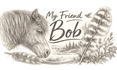
He is my friend.
And perhaps the most important thing I can do for him is to become someone worthy of the trust I hope he will place in me.
This is what From the Ground Up is really about.
Not starting again because we have failed, but beginning again with a little more understanding than we had before.
Not abandoning the dream, but allowing the relationship to shape it.
Not simply asking what Apollo can learn from me, but remaining curious about everything he has to teach me.
Because if there is one thing I am beginning to understand, it is that stewardship isn't about knowing best.
It's about being willing to keep learning.
And this time, I want to make sure I am paying attention.
Add comment
Comments